
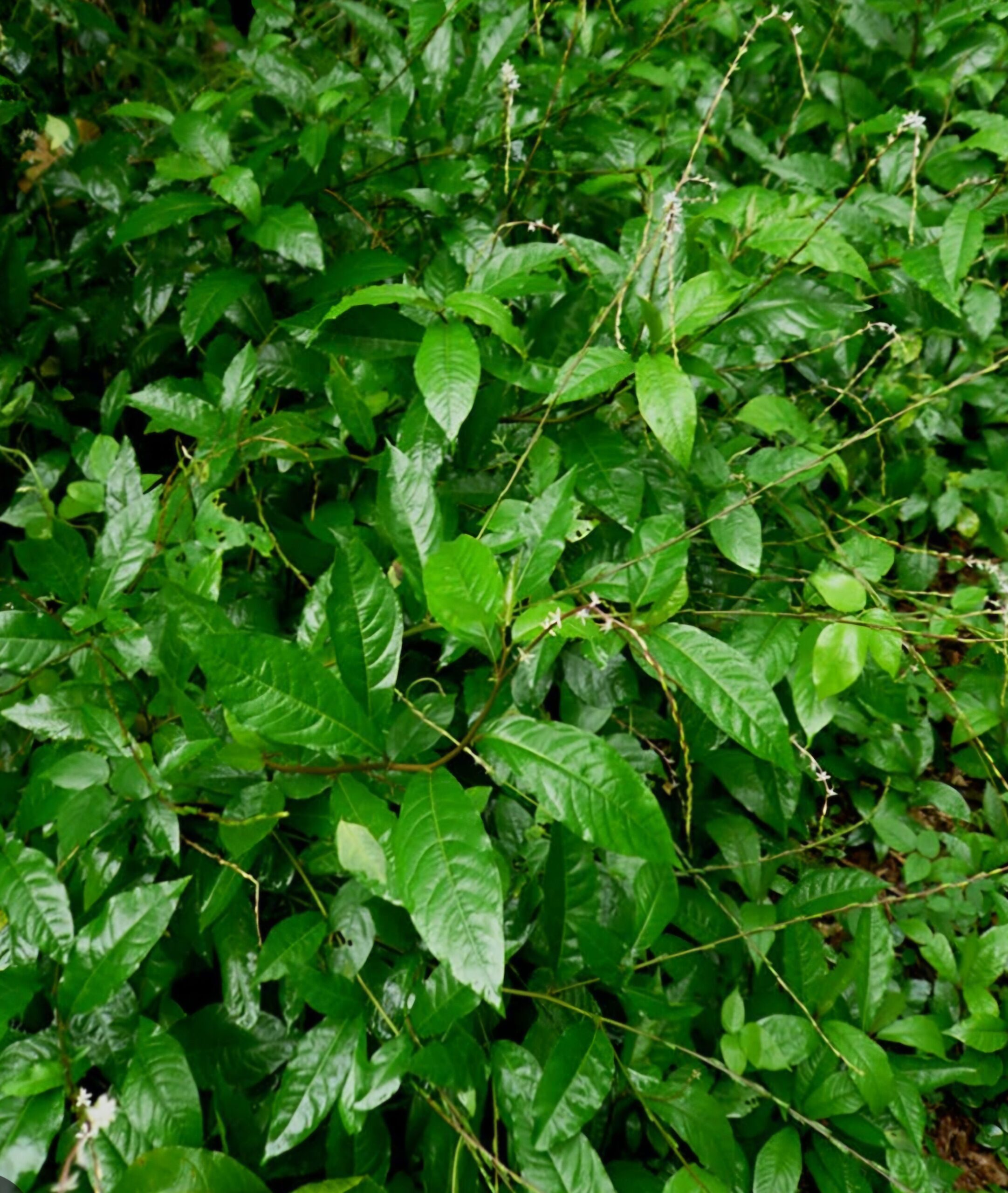
A Plant That Grows Where It’s Needed
What Is Guinea Hen Weed?
In Jamaica, people have respected guinea hen weed as bush medicine for generations. Known botanically as Petiveria alliacea, this perennial herb grows across the Caribbean, Central America, South America, and parts of Africa. Locally, Jamaicans often call it guinea hen weed or anamu.
Because it thrives in warm climates, the plant grows easily and often appears wild. For that reason, many people associate guinea hen weed with resilience, adaptability, and self-sufficiency. It doesn’t demand much and grows where the land allows it.
The plant produces long green leaves and releases a strong, unmistakable aroma when crushed. Although the scent can feel overwhelming at first, many traditional users view it as a sign of the plant’s potency.
As a little girl, I didn’t even know this plant by name. It grew freely all over the yard, wild and unbothered. I remember picking the green leaves and using them as money while playing shopkeeper with my friends, trading them back and forth with serious childhood purpose. Every time I crushed the leaves in my hands, that sharp, potent smell rose up and made me wrinkle my nose.
Even then, the plant left an impression. It rooted itself not just in the soil, but in my memory.
Traditional Uses in Jamaican Bush Medicine
In Jamaican bush medicine, people traditionally used guinea hen weed as part of ongoing wellness routines, not as an emergency fix. Elders prepared it as tea, added it to baths, or turned to it during seasonal shifts when the body felt off balance or depleted.
In my own family, my grandmother used guinea hen weed in some of her many herbal concoctions. She brewed each one slowly, with patience and respect for the land. At the time, I didn’t understand the science behind it. However, I understood the wisdom. This plant mattered because it connected us to our backyard, our family, and our heritage.
Rather than focusing on a single illness, people valued the herb for its cleansing and grounding qualities. They used it intentionally, not excessively, and always with respect for both the plant and the body.
That approach matters. Traditionally, herbs supported a lifestyle. They didn’t replace care, community knowledge, or discernment.
How to prepare and enjoy:
People most commonly prepared guinea hen weed as a simple tea.
Preparation method:
- Steep 1 teaspoon of dried leaves or root in 8 oz of hot water
- Let it steep for 5-7 minutes
- Serve warm or cold
Simplicity has always been part of the tradition.
What Guinea Hen Weed Contains: A Research-Based Perspective
Beyond tradition, modern researchers have taken interest in guinea hen weed because of its phytochemical makeup. Scientific studies have identified several naturally occurring compounds in the plant, including:
- Sulfur-containing compounds
- Flavonoids
- Polyphenols
Researchers widely study these compounds in plant science for their antioxidant and anti-inflammatory properties. Most existing research on guinea hen weed takes place in laboratory settings or animal models. These studies aim to understand how the plant interacts with biological systems.
Traditional use explains why communities value the plant. Scientific research helps explain what the plant contains. Both perspectives can exist side by side, responsibly and honestly.
Internationally, people also know guinea hen weed as anamu. Ethnobotanical records document its use across the Caribbean and Latin America, including academic references connected to institutions such as the University of the West Indies and global herbal research bodies.
University of the West Indies Research
How People Use Guinea Hen Weed Today
Today, when people talk about traditional herbs in Jamaica, guinea hen weed remains one of the most recognized. Many people still prepare it as tea using the leaves or root. Others include it occasionally as part of a broader wellness routine, especially during times when they want to feel more grounded or supported.
Responsible use emphasizes:
- Moderation
- Awareness of individual body responses
- Intentional use rather than daily dependence
Herbs work best when people use them thoughtfully.
Wellness, Prevention, and Intentional Living
I believe strongly in prevention over cure. In healthy bodies, herbs like Guinea Hen Weed can support balance when combined with nourishing food, rest, movement, and connection to nature. They are not meant to override the body’s signals but to work alongside them.
This philosophy aligns with how I approach beekeeping and sustainability. Strong systems don’t rely on emergency fixes. They usually work well because they are tended to consistently and with care.
Sourcing, Sustainability, and Respect for the Plant
Today, interest in guinea hen weed Jamaica wellness uses continues to grow as more people seek plant-based traditions rooted in culture.

As interest in traditional herbs grows, sourcing becomes critical. Wild harvesting without respect can damage ecosystems and reduce future availability. Ethical cultivation, transparency, and respect for land ensure that these plants remain accessible for generations to come. I strongly align with the philosophy that wellness needs responsibility and tradition needs to exist with modern stewardship.
Watching Guinea Hen Weed grow in my yard as a child taught me more than just the playful value of leaves in our make-believe shop. It taught me to notice how plants thrive when they are respected, when they are allowed to grow in their natural rhythm, and when we take only what we need. That same principle guides how we source herbs for Bee Sweet Honey products today.
We look for plants that are wild, abundant, and ethically harvested, grown in spaces that honor the ecosystem. Every plant chosen with intention and for the life it represents and the community of plants, bees, and soil it supports. When we gather Guinea Hen Weed, we do so thoughtfully, ensuring the plant continues to flourish in its home, so future generations can experience its aroma, its history, and its place in Jamaican tradition.
When you choose our Guinea Hen Weed, you’re not just buying an herb. You’re participating in a cycle of care for the plant, for the land, and for your own intentional lifestyle.
Shop Our Ethically Sourced Guinea Hen Weed Leaf
Shop Our Ethically Sourced Guinea Hen Weed Root
Safety and Responsible Use
Guinea Hen Weed is not appropriate for everyone. Those who are pregnant, breastfeeding, managing chronic conditions, or taking prescription medications should consult a qualified healthcare professional before using herbal products.
Wellness is more about choosing wisely than it is taking more.
Herbal Disclaimer
Disclaimer:
This content is provided for educational and informational purposes only and is not intended as medical advice. I am not a licensed medical practitioner or herbalist. Herbs are not intended to diagnose, treat, cure, or prevent any disease. Always consult a qualified healthcare professional before using herbal products, especially if you are pregnant, nursing, have a medical condition, or are taking prescription medications.