
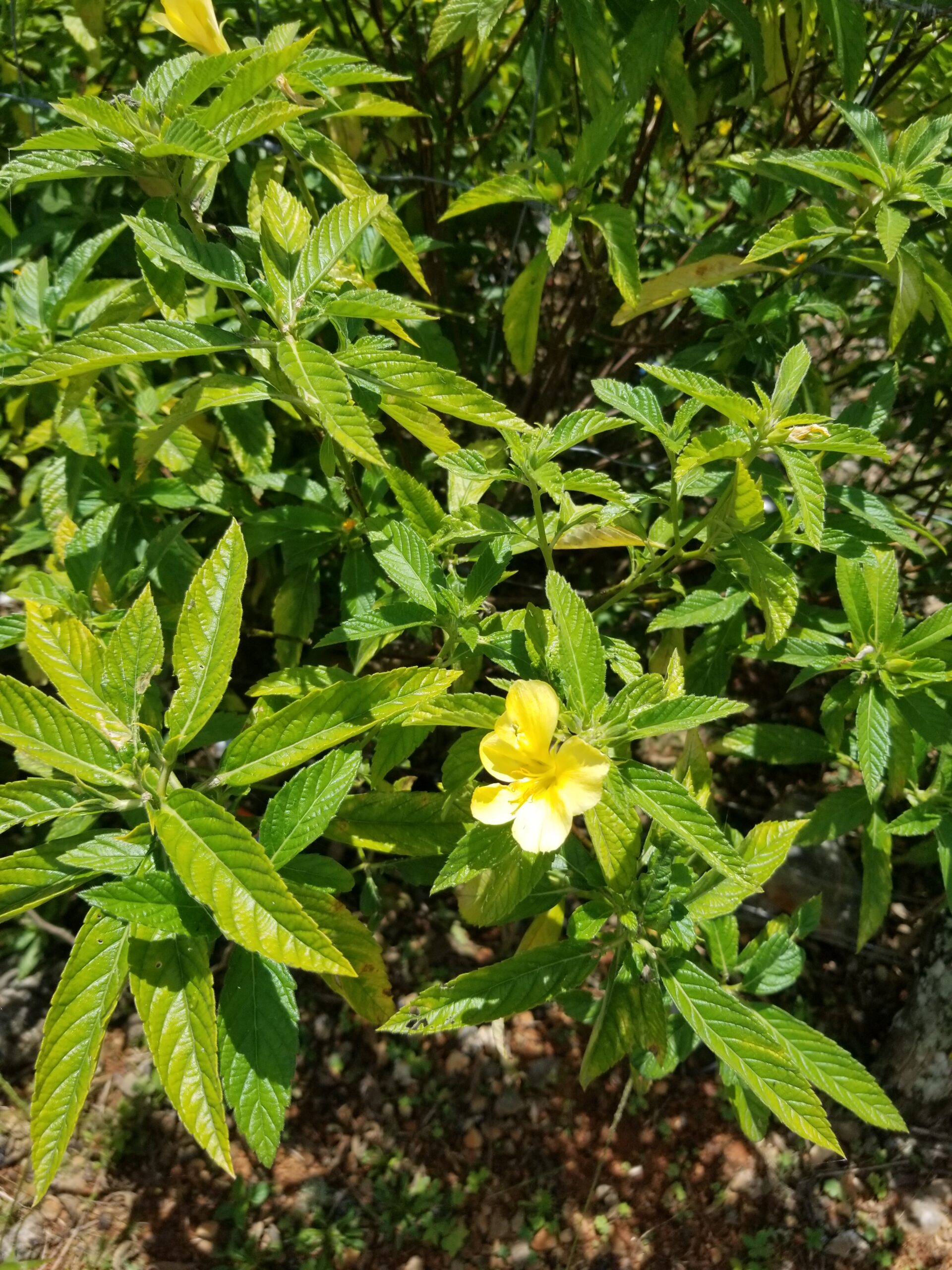
The Herb the Goats Always Find
One thing I’ve noticed over the years is that our goats seem to know exactly where the Damiana grows.
Long before I began harvesting it for tea, I watched them browse through the wild plants on our land and make their way toward this particular herb. Older Jamaicans would laugh and say, “That’s why them call it Ram Goat Dash Along.”
According to local folklore, a ram goat that finds this herb soon goes looking for a nanny goat, and before long there are kids in the pasture. Whether you see it as folklore, tradition, or simply a story passed through generations, the name has stuck.
Today, Ram Goat Dash Along remains one of Jamaica’s most recognized traditional herbs. It grows wild on the same land where our bees forage. When I harvest it, I carefully select only what I need, leaving plenty behind so the plant can continue to thrive naturally.
For me, Damiana is more than just an herb. It is a reminder that some of our most valuable resources are growing quietly around us, waiting to be noticed.

What Is Damiana?
Damiana (Turnera diffusa) is a small flowering shrub native to parts of the Caribbean, Central America, Mexico, and South America. In Jamaica, it is widely known as Ram Goat Dash Along.
The plant produces aromatic leaves that have been used traditionally in herbal preparations for generations. Across different cultures, Damiana has been associated with relaxation, vitality, and overall wellness.
Today, many people enjoy Damiana as a herbal tea because of its pleasant aroma and distinctive flavour.
Why Is It Called Ram Goat Dash Along?
Few Jamaican herbs have a nickname as memorable as Ram Goat Dash Along.
The name is deeply rooted in local culture and folklore. Older generations often shared stories about ram goats seeking out the plant and becoming unusually energetic after eating it. These stories were passed from one generation to the next and became part of Jamaica’s rich tradition of plant knowledge.
While folklore should not be confused with scientific evidence, these stories help preserve cultural connections to the plants that have shaped rural life for generations.
Traditional plant names often tell us as much about our history and communities as they do about the plants themselves.
What Does Damiana Taste and Smell Like?
One of the things I appreciate most about Damiana is its character.
The aroma is warm and earthy with strong herbaceous notes. When the leaves are crushed, they release an intensely green scent with hints of spice and a soft tea-like fragrance.
When brewed, Damiana produces a tea that reminds me somewhat of green tea, but with its own unique personality.
You may notice:
- earthy and grassy notes
- subtle floral undertones
- a faint natural sweetness
- gentle woody characteristics
- a mild pleasant bitterness
The result is a comforting tea that feels refreshing.
How I Harvest and Prepare Damiana
The Damiana I offer through Bee Sweet Honey Jamaica grows wild on the land where our bees forage.
I harvest only what I need and leave healthy plants behind to continue growing. This approach supports long-term sustainability and helps preserve the natural abundance of the area.
After harvesting, the leaves are:
- Carefully cleaned
- Prepared for drying
- Dehydrated at controlled temperatures
- Packaged as loose-leaf tea or tea bags
I enjoy knowing exactly where the herb comes from and how it was handled every step of the way.
In a world where many products travel thousands of miles before reaching consumers, there is something meaningful about drinking tea that comes directly from the landscape around you.

Traditional Uses of Damiana
Damiana has a long history of traditional use in herbal practices.
Across different cultures, people have traditionally used Damiana to support:
- relaxation and emotional wellbeing
- vitality and energy
- general wellness
- connection and intimacy
- stress management
In Jamaica, many people are drawn to Damiana because of the stories and traditions surrounding the herb. Some people drink it as part of their daily wellness routine, while others enjoy it occasionally as a calming evening tea. As with many traditional herbs, experiences vary from person to person.
Why Many Women Are Interested in Damiana
In conversations with customers, I often hear from women navigating perimenopause and menopause who are exploring herbal teas as part of their overall wellness routines.
Many are looking for ways to support:
- mood balance
- relaxation
- overall wellbeing
- quality of life during hormonal transitions
Damiana has traditionally been included in wellness practices for these purposes, which is one reason it continues to attract interest today.
Why Many Men Are Drawn to Damiana
Many men are familiar with Damiana because of its longstanding reputation in traditional herbal culture.
Stories about Ram Goat Dash Along often focus on vitality, stamina, and masculine energy.
Whether people are motivated by folklore, curiosity, or personal preference, Damiana remains one of the most talked-about herbs in Jamaican herbal traditions.
How to Prepare Damiana Tea
Preparing Damiana tea is simple.
Ingredients
- 1 teaspoons dried Damiana leaves
- 1 cup hot water
Method
- Add the Damiana to a cup or teapot.
- Pour hot water over the leaves.
- Cover and steep for 10–15 minutes.
- Strain if necessary.
- Enjoy.
Many people drink one to two cups daily as part of their wellness routine. You can also add raw honey if you prefer a touch of natural sweetness.
Traditional Herbal Knowledge and Responsible Use
Traditional herbs have been part of Jamaican culture for generations. However, it is important to approach herbal education responsibly.
Damiana is not intended to diagnose, treat, cure, or prevent disease.
If you are pregnant, nursing, taking medication, or managing a health condition, consult a qualified healthcare professional before adding any new herb to your routine.
Responsible herbal education respects both traditional knowledge and modern healthcare guidance.
Connecting With Jamaica’s Herbal Traditions
One of the reasons I enjoy working with herbs is that they help us reconnect with place.
Plants like Damiana remind us that valuable knowledge exists all around us. In the stories of elders, in the landscape, and in traditions that have been passed down through generations.
Whether you are discovering Ram Goat Dash Along for the first time or revisiting a familiar favourite, taking the time to learn about the plants around us is a meaningful way to stay connected to nature and culture.
Final Thoughts
Damiana has been part of Jamaica’s herbal traditions for generations. From the folklore surrounding its colourful name to its continued popularity as a tea, it remains a plant that captures curiosity and conversation.
For me, it is also a reminder of the connection between land, bees, herbs, and community. Every harvest begins with respect for the natural world and appreciation for the knowledge that came before us.
Some of the most valuable lessons in life are growing quietly right beneath our feet.
Related Reading
Like Damiana, several other traditional Jamaican herbs continue to play an important role in local herbal culture. Explore our article on Guinea Hen Weed Jamaica: Traditional Uses & Herbal Education.
Many people who enjoy herbal teas also appreciate Jamaican Dog Blood Bush Tea: A Time-Honored Remedy for Women’s Wellness.
Seasonal living also influences how we connect with food and plants. Learn more in Taste the Season: Why You Should Eat Jamaican Seasonal Fruits.
Frequently Asked Questions About Damiana
Yes. Damiana tea is traditionally used by both men and women. In Jamaican herbal culture, people enjoy it for a variety of reasons, including general wellness and relaxation. As with any herb, individual experiences may vary, and anyone with medical concerns should consult a healthcare professional before adding new herbs to their routine.
Yes. In Jamaica, Damiana is commonly known as Ram Goat Dash Along.
The aroma is warm and earthy with strong herbaceous notes. When the leaves are crushed, they release an intensely green scent with hints of spice and a soft tea-like fragrance.
Steep 1 teaspoon of dried Damiana leaves in 1 cup of hot water for 10-15 minutes.
Yes. Damiana grows in parts of Jamaica and is known locally as Ram Goat Dash Along.
About Author

Yanique White-Taylor is a Jamaican beekeeper, herbal educator, and co-founder of Bee Sweet Honey Jamaica. She creates educational content on beekeeping, raw honey, Jamaican bush teas, and sustainable living. Her work is based on hands-on experience with bees, herbs, and natural product creation, sharing practical knowledge rooted in Jamaica’s natural and cultural landscape.