
There is always a moment that makes people smile.
I pour hot water over a handful of dried Butterfly Pea flowers, and within seconds the cup transforms into a deep sapphire blue unlike anything most people expect from a herbal tea. Then someone squeezes in a little lime.
Almost instantly, the brilliant blue becomes a rich purple.
Every single time, the reaction is the same.
“How did it do that?”
That’s the real magic of Butterfly Pea. It reminds us that nature still has the power to surprise us.
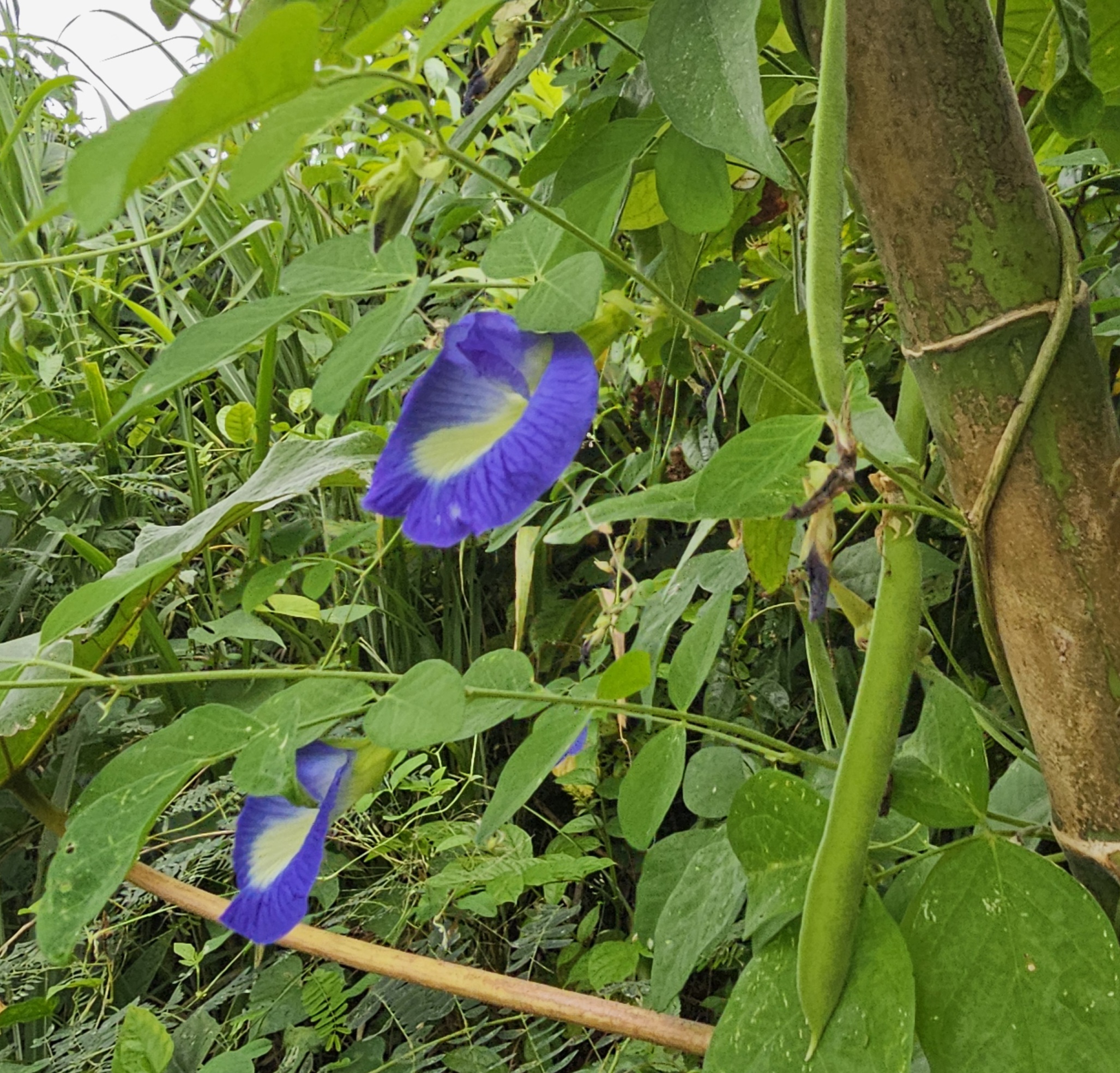
As a beekeeper and herbal educator, I spend a lot of time outdoors. Many of the herbs I share with others grow on the same land where our bees forage. Butterfly Pea is one of those plants. It grows wild across our property, climbing among the surrounding vegetation, producing striking blue flowers that attract both bees and curious people alike.
Over the years, I’ve come to appreciate Butterfly Pea for more than its beautiful colour. It has become part of my daily rhythm, a calming cup of tea enjoyed with a spoonful of raw honey, and a reminder that some of nature’s most remarkable gifts often grow unnoticed until we slow down enough to see them.
In this article, I’ll share how Butterfly Pea grows in Jamaica, its traditional uses, what current research tells us, how I prepare it, and why I believe this extraordinary blue flower deserves a place in every Jamaican garden.
What Is Butterfly Pea?
Butterfly Pea (Clitoria ternatea) is a flowering vine belonging to the legume family. Although thought to have originated in tropical Asia, it is now widely cultivated throughout tropical and subtropical regions, including Jamaica and the wider Caribbean.
The plant produces vibrant blue flowers that have been used traditionally for generations as a natural colouring agent, herbal tea, and ornamental garden plant.
Today, Butterfly Pea has become increasingly popular around the world thanks to its naturally occurring pigments called anthocyanins. These pigments are responsible for the flower’s striking blue colour and the fascinating colour change that occurs when an acidic ingredient such as lime or lemon juice is added.
Beyond its beauty, Butterfly Pea has earned a place in many home gardens because it is easy to grow, attractive to pollinators, and useful in the kitchen.

Growing Butterfly Pea in Jamaica
One of the things I appreciate most about Butterfly Pea is that it seems perfectly at home in Jamaica.
On our land, it grows wild alongside many other useful plants. I don’t cultivate large fields of it. Instead, I harvest responsibly from what nature already provides while collecting seeds from mature pods to establish more plants for future seasons.
Although Butterfly Pea blooms seasonally in some parts of the world, our warm Caribbean climate allows it to flower for much of the year. That means there are often blossoms available for both people and pollinators.
I’ve also noticed that our honeybees regularly visit the flowers. While Butterfly Pea may not be one of the primary nectar sources for honey production, every flowering plant contributes to the diversity of forage available to pollinators. Gardens filled with a variety of flowering species help support healthier bee populations throughout the year.
For me, growing herbs has never been just about harvesting tea. It’s also about creating spaces where people, plants, and pollinators can thrive together.
From My Harvest Basket
One of my favourite parts of working with Butterfly Pea is that every harvest begins with a walk across the same land where our bees forage.
I pick only the flowers I need, leaving plenty behind for bees, butterflies, and future seed production. After harvesting, I gently wash the flowers before carefully dehydrating them to preserve their vibrant colour. Once dried, I package them as loose-leaf tea and tea bags so others can enjoy them at home.
Lately, I’ve been collecting seeds from mature pods with the hope of growing even more Butterfly Pea around the property. It feels like a small investment in the future, one that benefits both our bees and the people who enjoy this remarkable plant.
Butterfly Pea’s Colour-Changing Magic: The Science Behind Blue Tea
One of the reasons Butterfly Pea has captured the attention of tea lovers around the world is its naturally vibrant colour.
When brewed, the flowers release a deep blue pigment that comes from naturally occurring plant compounds called anthocyanins. These pigments belong to a group of flavonoids found in many colourful plants, including blueberries, purple cabbage, and other deeply coloured fruits and flowers.
What makes Butterfly Pea especially fascinating is how sensitive these pigments are to changes in acidity.
When I add a squeeze of lime to my Butterfly Pea tea, I get to witness something that feels almost magical. The deep blue slowly shifts into shades of purple and violet. It is a simple reminder of the chemistry happening all around us in the natural world.
This colour change happens because the acidity affects the structure of the anthocyanin pigments. As the pH of the tea changes, the pigments reflect different wavelengths of light, creating a new colour.
For children especially, Butterfly Pea tea can become a beautiful introduction to the science of plants. It encourages curiosity and reminds us that nature is not separate from science. Nature is science.
How Butterfly Pea Tea Tastes
Although Butterfly Pea is famous for its colour, its flavour is much more subtle.
When I brew Butterfly Pea flowers, I notice a delicate taste that is difficult to compare to many other herbal teas.
The flavour is:
- lightly earthy,
- gently grassy,
- slightly woody,
- with a subtle natural sweetness.
It does not have an overpowering herbal taste, which makes it easy to enjoy on its own or blend with other botanicals. Butterfly Pea is much like a light green tea.
I personally enjoy adding a little raw honey and lime. The honey adds warmth and sweetness, while the lime creates the beautiful colour transformation that makes this tea so enjoyable.
The aroma of dried Butterfly Pea flowers is also very gentle. I notice soft grassy and earthy notes, while the fresh flowers themselves have very little scent. Unlike strongly aromatic herbs, Butterfly Pea invites appreciation through its appearance, versatility, and experience.
Traditional Uses of Butterfly Pea
Across different cultures, Butterfly Pea has a long history of traditional use.
In various parts of Southeast Asia, the flowers have traditionally been used as:
- a natural food colouring,
- a herbal infusion,
- an ingredient in traditional beverages,
- and part of cultural plant practices.
In Jamaica and the Caribbean, many people have become familiar with Butterfly Pea through herbal teas, home gardens, and interest in natural plant-based ingredients.
Within herbal traditions, Butterfly Pea is often appreciated as a calming, caffeine-free tea enjoyed as part of a daily wellness routine.
At Bee Sweet Honey Jamaica, I believe it is important to respect both traditional knowledge and scientific understanding. Traditional plant knowledge carries generations of observation and cultural wisdom. At the same time, modern research helps us better understand the compounds found within these plants. Both perspectives have value.
Butterfly Pea is one of several traditional herbs I explore through Bee Sweet Honey Jamaica. You can also learn more about another herb I harvest and prepare in my article on Damiana in Jamaica.
What Does Research Say About Butterfly Pea?
Butterfly Pea has gained attention among researchers because of its naturally occurring compounds, particularly anthocyanins and other flavonoids. Laboratory studies have explored the antioxidant properties of compounds found in Butterfly Pea flowers. Researchers are also investigating how these plant compounds interact with different biological processes. However, it is important to understand the difference between laboratory research and proven effects in humans.
While early research is interesting, more human studies are needed before making strong conclusions about specific health outcomes.
Instead of viewing Butterfly Pea as a cure or treatment, I prefer to appreciate it for what it truly is: A beautiful botanical with a long history of traditional use, a source of naturally occurring plant compounds, and a nourishing addition to a balanced lifestyle. A cup of tea can be simple. It can also connect us to culture, plants, and the natural world around us.
Enjoying Butterfly Pea Tea as Part of a Daily Ritual
One of the things I love about herbal teas is that they create moments of pause.
Life can move quickly. Between caring for family, running a business, managing responsibilities, and keeping up with everything that needs to be done, small rituals can help us reconnect with ourselves.
For me, preparing Butterfly Pea tea is one of those moments.
There is something anchoring about:
- selecting the dried flowers,
- watching the colour deepen as they steep,
- adding a little raw honey from our bees,
- and enjoying a drink created from plants grown close to home.
I believe herbal teas are about the plants and the relationship we build with nature.
How I Prepare Butterfly Pea Tea
For those who want to experience Butterfly Pea tea at home, here is my simple preparation method.
Ingredients
- 1-2 teaspoons dried Butterfly Pea flowers
- 1 cup hot water
- Raw honey (optional)
- Lime or lemon (optional)
Method
- Add dried Butterfly Pea flowers to hot water.
- Allow the flowers to steep for several minutes.
- Watch the water transform into a beautiful blue colour.
- Add raw honey if desired.
- Add lime or lemon to experience the natural colour change, and enhance flavour.
Butterfly Pea can be enjoyed warm or chilled over ice. It also blends beautifully with other herbs and natural ingredients, allowing people to create their own herbal tea combinations.
Butterfly Pea and Pollinators: A Flower That Supports Biodiversity
One of the things that makes Butterfly Pea special to me is that it is useful for people and is also part of the wider ecosystem around us.
Butterfly Pea grows among other plants that contribute to a diverse environment for pollinators. While honeybees visit many different flowering plants throughout the year, having a variety of blooms available helps create a healthier landscape for bees and other beneficial insects.
A garden does not have to be large to make a difference. A small space filled with flowering plants can provide food and shelter for pollinators that play an important role in our ecosystems. Butterfly Pea is especially appealing for tropical gardens because it is a hardy climbing plant that produces beautiful flowers while adding diversity to the landscape.
Planting Butterfly Pea is about creating a relationship with the land and encouraging more spaces where nature can thrive.
Growing Butterfly Pea at Home in Jamaica
Butterfly Pea is a wonderful plant for gardeners who want to add beauty and usefulness to their surroundings. Because it is naturally adapted to warm climates, it grows well in tropical regions like Jamaica. The plant is a climbing vine, meaning it appreciates support such as trellises, fences, or nearby plants where it can spread.
If you want to grow Butterfly Pea at home, consider these basic growing needs:
Sunlight
Butterfly Pea grows best in areas with plenty of sunlight. A sunny location encourages healthy growth and flower production.
Soil
The plant prefers well-draining soil. Like many plants, it benefits from soil that contains organic matter and supports healthy root development.
Water
While it can tolerate periods of dry weather once established, consistent watering helps support stronger growth and flowering.
Seeds
Butterfly Pea produces seed pods after flowering. These seeds can be collected and planted to grow new vines.
This is something I am beginning to do on our land. After seeing how well Butterfly Pea grows naturally, I have started collecting seeds with the intention of planting more throughout the property.
There is something meaningful about saving seeds. It is a simple way of preserving plants, encouraging biodiversity, and building a deeper connection with the food and herbs we use.
How Bee Sweet Honey Jamaica Harvests Butterfly Pea
At Bee Sweet Honey Jamaica, our approach to herbs begins with respect for the plant and the environment around it. I collect the flowers carefully, taking only what is needed and leaving enough behind for continued growth and pollinators.
After harvesting, the flowers are washed and dehydrated before being packaged as herbal tea.
The process is simple, but it carries a deeper meaning. Every bag represents a connection between the land, the plants, and the people who choose to support locally grown Jamaican products. From my experience, herbal education is about both sharing information and sharing a relationship with nature.
Frequently Asked Questions About Butterfly Pea Tea
What is Butterfly Pea?
Butterfly Pea (Clitoria ternatea) is a tropical flowering vine known for its bright blue flowers. The flowers are commonly used to make herbal tea and natural food colouring.
Why does Butterfly Pea tea change colour?
Butterfly Pea flowers contain natural pigments called anthocyanins. When an acidic ingredient such as lime or lemon is added, the change in acidity causes the tea’s colour to shift from blue toward purple.
Does Butterfly Pea grow in Jamaica?
Yes. Butterfly Pea grows well in Jamaica’s warm tropical climate. It can thrive in sunny areas and is commonly grown as an ornamental and useful garden plant.
Does Butterfly Pea tea contain caffeine?
No. Butterfly Pea herbal tea is naturally caffeine-free, making it an option for people looking for a colourful herbal beverage without caffeine.
How do you prepare Butterfly Pea tea?
To prepare Butterfly Pea tea, steep dried flowers in hot water for several minutes. It can be enjoyed plain or combined with ingredients such as raw honey, lime, lemon, or other herbs.
Can I grow Butterfly Pea at home?
Yes. Butterfly Pea is suitable for home gardens in tropical climates. It can be grown from seeds and trained to climb along supports such as fences or trellises.
Final Thoughts: A Blue Flower With a Bigger Story
Butterfly Pea reminds me that some of nature’s most fascinating gifts are often simple.
A small blue flower growing quietly on the land can become a cup of tea, a moment of curiosity, a lesson in plant science, and a reminder of our connection to the natural world.
Harvesting Butterfly Pea is part of a larger journey for me. It is about learning from the plants, preserving traditional knowledge, supporting biodiversity, and sharing the beauty of Jamaica’s natural resources with others.
Whether you enjoy Butterfly Pea for its vibrant colour, its gentle flavour, your own gardening journey, or simply the experience of drinking a tea grown close to nature, this flower offers something special.
At Bee Sweet Honey Jamaica, we believe that plants tell stories.
Some stories begin with a bee visiting a flower. Some begin with a seed planted in the soil. And some begin with a simple cup of tea that reminds us to slow down and appreciate the world around us.

Yanique White-Taylor is a Jamaican beekeeper, herbal educator, and co-founder of Bee Sweet Honey Jamaica. She creates educational content on beekeeping, raw honey, Jamaican bush teas, and sustainable living. Her work is based on hands-on experience with bees, herbs, and natural product creation, sharing practical knowledge rooted in Jamaica’s natural and cultural landscape.
Yanique White-Taylor is a Jamaican beekeeper, herbal educator, and co-founder of Bee Sweet Honey Jamaica. She creates educational content on beekeeping, raw honey, Jamaican bush teas, and sustainable living. Her work is based on hands-on experience with bees, herbs, and natural product creation, sharing practical knowledge rooted in Jamaica’s natural and cultural landscape.